
SALES AND MARKETING ALIGNMENT
Alignment is not a meeting problem.
It is a narrative problem. Two teams can hit every agreement between them and still send a buyer three different stories.
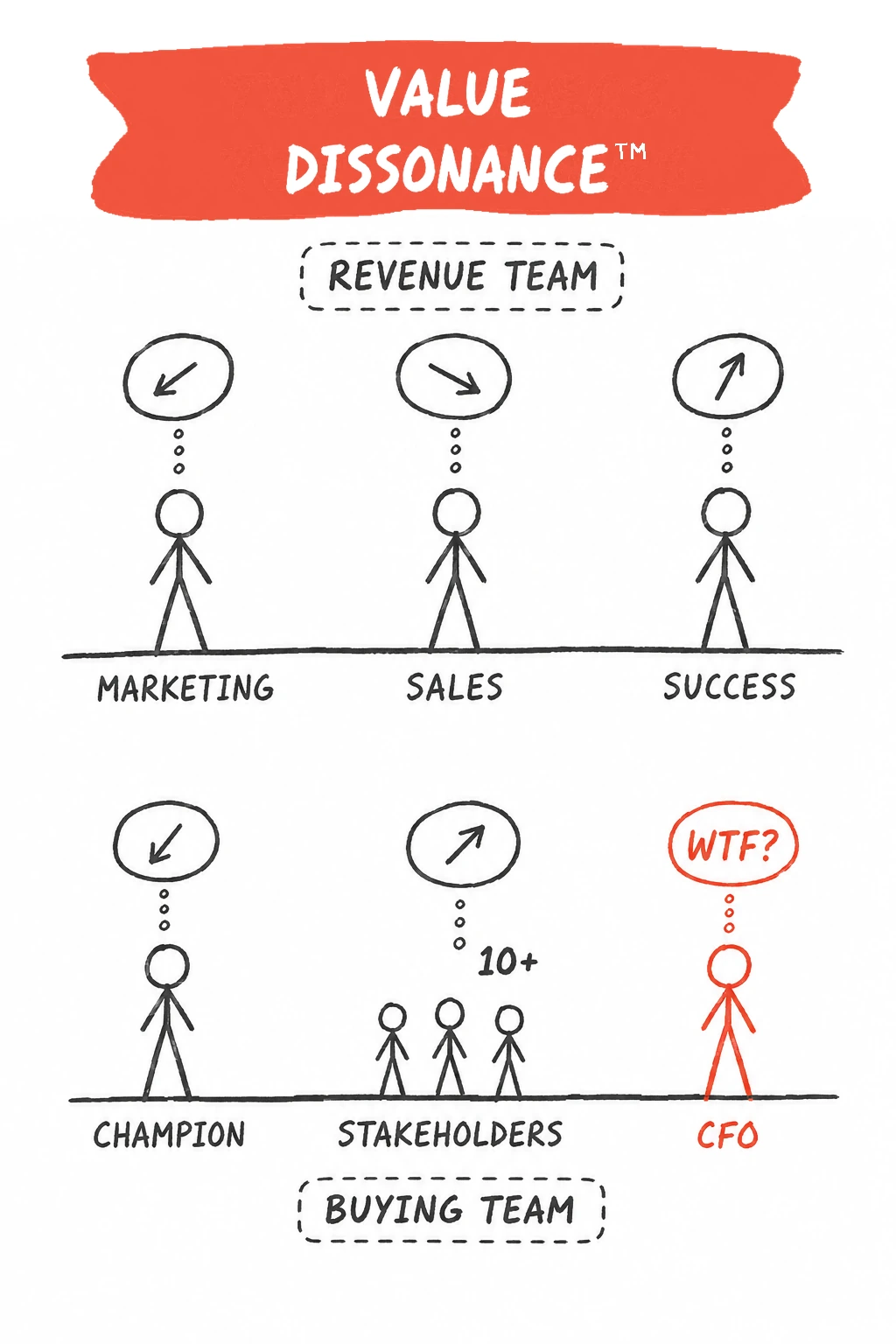
Ask ten leaders in the same company why a buyer should choose them and you get ten answers. Every one of them is reasonable. Marketing writes for a market, sales writes for a deal, success writes for a renewal, and nobody owns the story underneath.
The buyer does not experience ten reasonable answers. They experience one confusing company. We call that Value Dissonance™: the clash a buyer feels when everyone representing you describes your value differently.
It is not a competence problem, and it does not get solved by another standing meeting. Alignment on process is not alignment on story.
WHAT IT COSTS
The bill arrives as hesitation
Misalignment rarely shows up as a lost deal you can point at. It shows up as buyers slowing down, shrinking the purchase, or choosing nothing.
69%
69% of B2B buyers report inconsistencies between what a company’s website says and what its sellers tell them.
4%
Only 4% of companies say they have a clear, consistently understood value proposition. Those that do grew 19% in 2025 against 12% for the rest, about 1.6 times as fast.
74%
74% of B2B buying teams show unhealthy conflict during the decision. Teams that reach genuine consensus are far more likely to buy.
153%
Buyers hit with too much contradictory information are 153% more likely to settle for a smaller, less disruptive purchase than they planned.
THE FIX
One spine, four beats
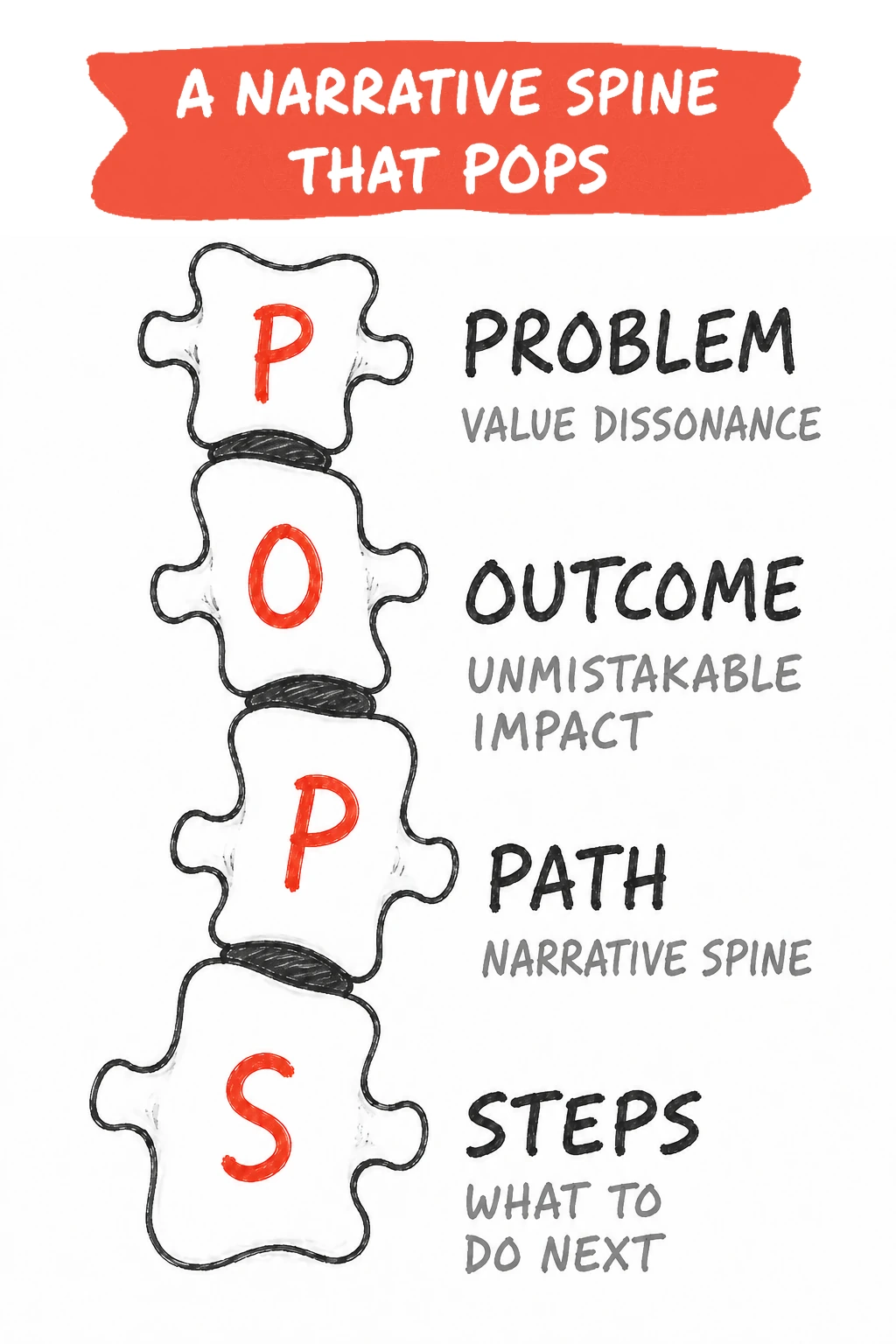
Give the whole revenue team one narrative spine and make every surface run on it. Problem, Outcome, Path, Steps. Name the problem in the buyer's words, show the outcome when it is solved, lay the path through, then the steps.
It is a skeleton rather than a script. Marketing, sales and success each say it in their own register, to their own audience, without changing the substance underneath. That is the difference between everyone saying the same words and everyone telling the same story.
Then it holds when you are not there. Your champion carries it into rooms you will never enter, and every AI surface repeating your story repeats a consistent one.
THE THIRD TEAM
Success is not an afterthought
Most alignment work stops at sales and marketing. Customer success is the team that inherits whatever the story promised, and the one buyers trust most, because they have the least reason to oversell.
Leave them out and the renewal conversation ends up quietly contradicting the pitch that won the account. Alignment that stops at two teams is two thirds of a job.
QUICK ANSWERS
Questions we get
What is sales and marketing alignment?
It is usually described as sales and marketing agreeing on leads, definitions and handoffs. That is the operational half. The half that decides whether buyers move is narrative alignment: whether product, marketing, sales and customer success describe the same value in the same way. Two teams can hit every service-level agreement between them and still send a buyer three different stories.
Why are sales and marketing misaligned?
Because each team builds its own story to do its own job, and nobody owns the one underneath. Marketing writes for a market, sales writes for a deal, success writes for a renewal. Each version is reasonable on its own. Together they produce Value Dissonance, the clash a buyer feels when everyone representing you describes your value differently.
How do you align sales and marketing?
Not with more meetings. Give the whole revenue team one narrative spine and make every surface run on it. Ours has four beats: the Problem the buyer is in, the Outcome when it is solved, the Path through, and the Steps to get there. It is a skeleton rather than a script, so each team can say it in their own register without changing the substance.
What does misalignment actually cost?
It shows up as buyer hesitation rather than a line item, which is why it goes unbilled. 69% of B2B buyers report inconsistencies between a company website and its sellers (Gartner, 2025). Buyers buried in contradictory information are 153% more likely to settle for something smaller and safer than they planned (Gartner). The deal does not die loudly. It shrinks, or it becomes no decision.
Where does customer success fit in?
Success is the team that inherits whatever the story promised, and the one buyers trust most because they have the least incentive to oversell. Leaving success out of the narrative work is how a renewal conversation ends up contradicting the pitch that won the account. Alignment that stops at sales and marketing is two thirds of a job.
How does AI change this?
It scales whatever you already have. Every agent, chatbot and AI search summary is another surface emitting your value story, trained on the material you have published. If that material disagrees with itself, AI repeats the disagreement at machine speed, to buyers you never meet, in rooms you will never enter.
Find out where your story splits
Seventeen questions on how consistently your value lands across the team. You get a score and the specific places it breaks down.
Seventeen questions. Five minutes. No email required.